https://www.facebook.com/Epta7metalband
From: Ireland/Italy
Sounds like: Industrial Metal
1. How did you get started with music and how did you develop your sound?
Gianz: I started playing drums when I was around fourteen years old, and since then I've been part of several bands in both Italy and Ireland, exploring a wide range of styles—from hard rock and traditional metal to gothic metal and death metal. Experiencing two different music scenes gave me different perspectives on songwriting, live performance and collaboration, and I think that has had a big influence on the way I approach music today. Over the years I didn't limit myself to drumming. I've also been a vocalist in different projects, and today I perform the growled backing vocals in EPTA7.
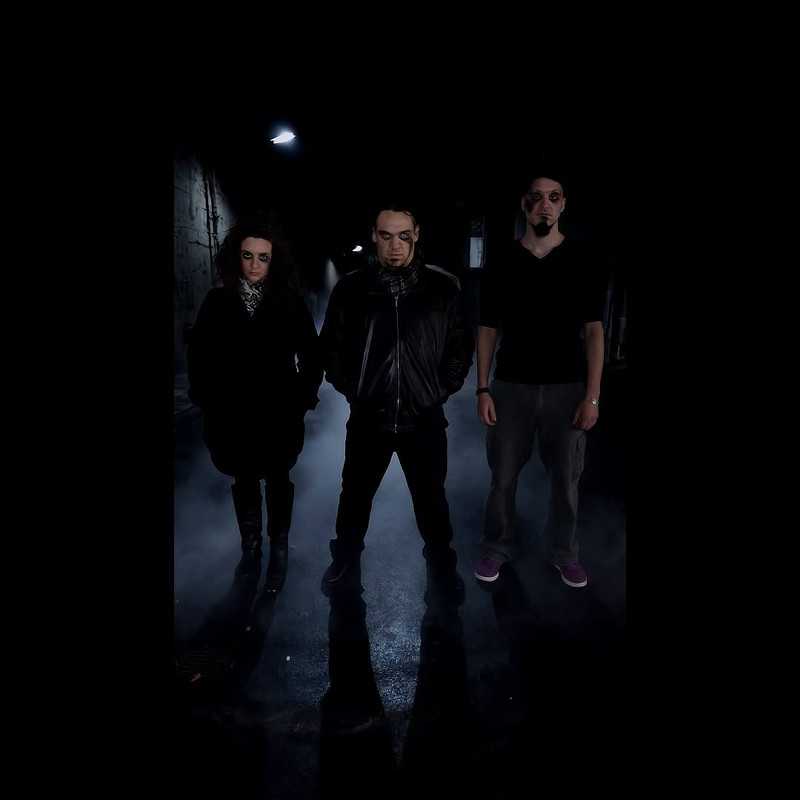
Very early on, I felt the need to start writing my own music. That's why, besides being the band's drummer, I'm also the main songwriter and the person responsible for most of our lyrics and concepts. I've always been fascinated by albums that tell a story rather than simply collecting unrelated songs. I enjoy building concept albums where the music, the lyrics and the atmosphere all work together to create an immersive experience. EPTA7 was founded together with Miss Grey and other musicians, with the idea of bringing together different musical backgrounds, ideas and artistic influences. After releasing our EptaSystem demo, the project went on hiatus for several years. That break gave us time to grow, both as musicians and as people. When we came back with Here Come the Freaks, our creative process hadn't really changed. Each of us brings our own musical background, creativity and artistic vision, and those different perspectives naturally come together to shape the EPTA7 sound.
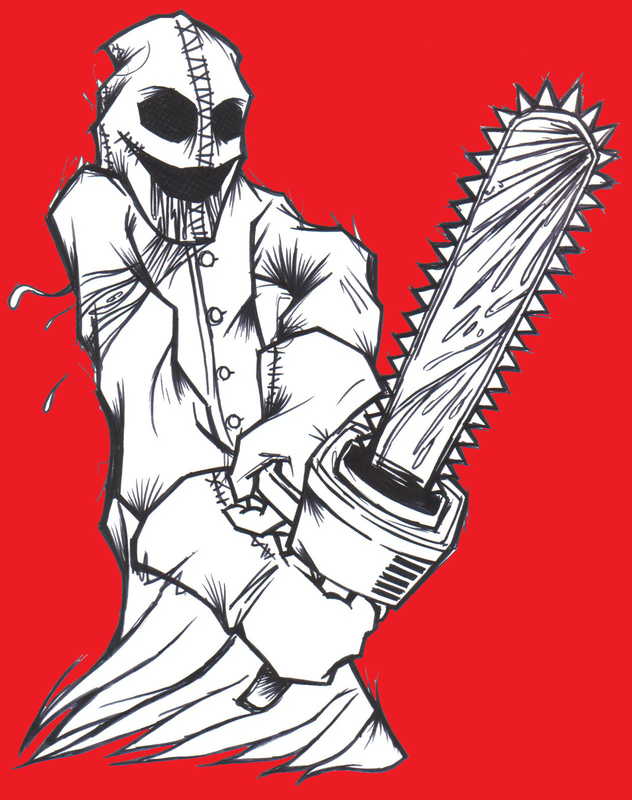
Miss Grey: More than a musician, I've always seen myself as an artist with a deep passion for music. From a very young age, I've been fascinated by both visual art and heavy metal, and those two worlds have always gone hand in hand for me. When I was younger I played a little keyboard and acoustic guitar, but I truly found my place playing bass and singing backing vocals when we founded EPTA7. To me, EPTA7 is much more than a band—it's a complete artistic project. Alongside the music, I've been involved in shaping the band's visual identity from the very beginning, creating the first version of our logo and helping develop the visual world that has evolved together with our music over the years. Together, we don't just write songs—we try to build an immersive universe where music, visuals and storytelling all become part of the same experience.
2. What do you want people to take away from your music?
Gianz: When I write music, I don't start with riffs or lyrics. I start with a world. It's not really a conscious process. I don't sit down and decide what I'm going to write about. Instead, an idea suddenly appears in my mind almost like a photograph or a scene from a movie. I can already see the environment, the atmosphere, the characters and even how they move. It's almost as if I'm looking into another world. That first vision already contains about sixty percent of what the final project will become. From that point on, I use creativity to develop it, adding details and connections that make the whole world feel more believable and immersive while staying true to that original vision. What I'd really love is for people to experience that world when they listen to our music. I don't want them to remember only a chorus or a lyric. I'd rather they close their eyes and feel transported somewhere else. Every album is meant to be an invitation into a different world, where every song is another piece of the same story. And of course... I also hope they enjoy the music itself, turn up the volume and have a great time headbanging along the way.
Miss Grey: I completely agree with Gianz, but from my perspective everything starts with emotion. I've always been an artistic person, especially through visual art. Images, colours and atmosphere have always been my natural way of expressing myself, and that's something I bring into EPTA7 alongside the music. For me, the common thread that connects everything we create—whether it's the songs, the artwork or the band's visual identity—is emotion. I don't expect everyone to feel the same thing. Someone might feel peace, someone else anger, curiosity, sadness or even discomfort. That's perfectly fine. What matters is that our music leaves a genuine emotional mark. That's why I focus so much on the visual side of EPTA7. My goal is to create images that strengthen the stories and emotions behind the music, so that together they become one complete artistic experience. Together, we don't just write songs—we try to build an immersive universe where music, visuals and storytelling all become part of the same experience.
3. How would you describe your sound to the average listener?
Gianz: That's actually a difficult question because our sound has evolved a lot over the years. When EPTA7 started back in 2012, our music was much closer to classic industrial metal. It was heavier, rawer and more instinctive, with aggressive drumming, distorted guitars, growling vocals and a very direct approach. We were never interested in showing off technical skills. Even back then, the song itself was always more important than individual performances. When we reunited to create Here Come the Freaks, we realised that we had changed as musicians and as people. During those years we had explored different musical styles, artistic influences and new ways of expressing ourselves, so our music naturally evolved with us.
Today our sound still has its roots in industrial metal, but it also embraces darker electronic textures, cinematic atmospheres and touches of darkwave. It's probably less interested in being heavier at all costs and much more interested in creating an emotional experience. If I had to describe our music in one word, it would be atmosphere. We don't write songs because they sound good—we write them because we feel them first. If a song doesn't move us first, it will never become an EPTA7 song. Everything starts in the gut. Only after that do we begin shaping it into music. For Here Come the Freaks, that emotion is mainly fear. Fear of being forgotten. Fear of the dark. Fear of the past. Fear of what lies ahead. That feeling runs through the entire album and shapes everything—from the music and lyrics to the atmosphere itself.
Miss Grey: I completely agree. Looking back at our first demo, our early sound was much more instinctive and raw. Over the years, however, we've learned to express those emotions in a more controlled, mature and cinematic way. One of the biggest influences on our evolution has actually been cinema. During the last decade we've developed a deep passion for visual storytelling, and I think that has changed the way we write music. We don't just think about how a song sounds—we think about the images it creates, the atmosphere it builds and the emotions it leaves behind. Today I see EPTA7 as a meeting point between music, visual art and cinematic narrative. Our songs are only one part of a much bigger picture. We want every album to feel like stepping into another world, where sound, imagery and emotion become one complete experience.
4. Who are three bands you’d like to tour with?
Gianz: That's a question every musician dreams of answering! The first band would definitely be Rammstein. Not only because of their music, but because I think Till Lindemann is one of those rare artists who comes along once in a generation. Their live shows, their vision and the way they've built such a strong identity are truly inspiring. The second would be Moonspell, especially during their early years. Those albums created incredible gothic atmospheres. They didn't just write songs—they built entire worlds, and that's something we've always tried to do with EPTA7 as well. The third would be Nine Inch Nails. Trent Reznor has always fascinated me, not only as a musician but as a complete artist. His music, his production and especially the visual side of his work have always felt incredibly original. Honestly, I'd love to tour with them just to see how that creative process works behind the scenes.
Miss Grey: My choices are very similar because Gianz and I share many of the same influences. I'd definitely say Rammstein, because they've shown how a band can create a complete artistic universe rather than simply performing songs. I'd also choose Type O Negative. Their music had a unique emotional depth and atmosphere that still inspires me today. And finally Alice Cooper. Even though he's not an industrial artist, he's one of the pioneers of theatrical rock. He proved that music, storytelling and stage performance can become one unforgettable experience, and that's something I've always admired.
5. What's your thoughts on AI generated music?
Gianz: First of all, thanks for asking this question because it's one of the most interesting topics in music today. Technology has always changed the way music is made. From electric guitars to synthesizers, digital recording and now artificial intelligence, evolution is simply part of music. Pretending AI doesn't exist isn't realistic. That said, I don't believe AI can replace genuine creativity. Music is built on emotions, experiences and personal stories. If you ask AI to create a song entirely on its own, the result is often technically impressive, but emotionally it usually feels flat. It lacks the human experience behind it. Our creative process is very different. Most of our songs begin with an idea, an emotion, a lyric, or even old recordings we've made over the years. Once we have a clear direction, we sometimes use AI to experiment with arrangements, sounds, textures or production ideas. The way we see it is very simple: “We're the mind. AI is the arm”. We make every creative decision. AI simply helps us explore possibilities or achieve a specific sound more efficiently. It never decides what EPTA7 should sound like. Used that way, AI is an incredibly powerful creative tool. Used as a replacement for creativity... I think everything eventually starts sounding the same.
Miss Grey: I completely agree. For me, AI should always remain a tool, never the artist. Everything we create starts with an emotion, an image or an idea. That's the heart of our music, and no technology should ever replace that. We use AI carefully, mainly to enhance certain sounds, explore creative ideas or support the production process. But the emotional core of every song always comes from us. If you rely too much on AI, you risk losing your own artistic identity. Technology should help artists express themselves, not replace their imagination. That's why we're very careful about how we use it. We want AI to expand our creativity, never define it.
6. What’s your take on the current state of Industrial Metal?
Gianz: That's another great question, and honestly, not an easy one to answer. One thing I've realised over the years is that "industrial metal" has become a very broad term. Two bands can both be described as industrial metal and still sound completely different from one another. That's one of the things I actually like about the genre—it has always been open to experimentation. To be honest, I haven't followed every new industrial release over the last decade. That might sound a little selfish, but we've been so focused on developing EPTA7 that we've spent most of our creative energy building our own identity rather than chasing trends. I do believe technology will continue to shape the genre. Just as synthesizers, sampling and electronics changed industrial metal in the past, AI and new production tools will influence where it goes next. I wouldn't be surprised if, in a few years, industrial bands were blending even more electronic music, hip-hop or completely unexpected influences. Personally, I don't think music should sound exactly the way it did twenty or thirty years ago. Evolution is healthy. Every new influence has the potential to create something unique. As for EPTA7, we're not trying to sound like the industrial bands of the '90s, and we're not trying to follow today's trends either. We simply follow the emotions and ideas that inspire us at a particular moment. Whatever our next album sounds like, it will always be the result of that journey.Our goal isn't to follow the scene. It's to add our own chapter to it.
Miss Grey: I completely agree. Over the last ten years we've probably spent more time looking inward than outward. We focused on growing as artists and as people, developing our own creative language instead of constantly comparing ourselves to what other bands were doing. In a way, it almost felt like locking ourselves in a dark room for years, experimenting, creating and refining our ideas until they finally became Here Come the Freaks. Maybe that approach kept us a little isolated from the modern industrial scene, but it also allowed us to develop a sound that feels honest and genuinely ours. I'd rather create something that reflects who we are than something that simply follows what's fashionable at the moment.
7. What’s the current local music scene like there in Ireland/Italy?
Gianz: That's a very interesting question because I've had the chance to experience both scenes firsthand. I've played for many years in Italy and later in Ireland, and I can honestly say they're very different. One of the things that impressed me most about Ireland is how open-minded people are when it comes to music. You can walk into a pub hosting a metal night and see a couple in their seventies enjoying a beer while a death metal band is playing in front of a crowd wearing black shirts and skulls. Nobody seems to think that's strange. Music is simply part of everyday life.
In Italy, things have traditionally felt more divided. People tend to stay within their own musical circles, and metal is still often seen as a niche genre rather than just another style of music. There are fantastic musicians and incredible bands, but the audience is generally much more segmented. Another thing I've noticed is that, in Ireland, people are often willing to give a band a chance even if they've never heard them before. In Italy, audiences are more likely to attend shows because they already know the band or because they're specifically into that genre. Technically, both countries have amazing musicians. Talent definitely isn't the issue. I think the biggest difference is the overall attitude. In Ireland, the scene feels more open, welcoming and community-driven. In Italy, it can sometimes feel more competitive and divided into smaller circles.
Miss Grey: I completely agree. Even as a fan, I always had the impression that metal in Italy was surrounded by more stereotypes. Years ago, simply listening to heavy music could lead people to make assumptions about you. What also surprised me was that even inside the metal community there were often divisions between different subgenres. Sometimes people who loved one style would look down on another, even though everyone was part of the same scene. In Ireland, we experienced something different. The atmosphere felt much more relaxed and inclusive. People seemed more interested in enjoying live music than putting labels on it. I think that's one of the things we've appreciated the most about being part of both cultures. Each scene has its strengths, but experiencing the openness of the Irish music community has definitely influenced the way we see music and the way we approach EPTA7.
8. What’s your take on the royalties that streaming services pay out to artists?
Gianz: That's definitely a sensitive topic for every independent musician. I think it's fair to say that the royalties paid by most streaming platforms are very low compared to the amount of work that goes into creating an album. Writing songs, arranging them, recording, mixing, mastering, artwork, promotion... all of that takes an enormous amount of time, energy and, of course, money. We didn't start EPTA7 to become rich. That's never been our motivation. We do it because we genuinely love creating music and sharing it with people.
At the same time, I think it's fair that artists receive a reasonable return for their work. I'm not talking about becoming millionaires through streaming, but simply earning enough to help cover the costs of making music. That would allow independent bands to invest in better productions, better videos and, ultimately, create even better music. The reality is that, for most independent bands, streaming isn't a way to make a living. It's a way to reach people. If you want to survive financially, you usually need another job, and that's true for the vast majority of underground musicians. Live shows, merchandise and direct support from fans are still incredibly important, and I think they always will be. We don't expect music to make us rich. We simply hope it can help us keep creating it.
Miss Grey: I completely agree. As both an artist and a music fan, I've always believed that supporting a band goes far beyond simply streaming a song. Buying an album, wearing a band's T-shirt, attending a concert or purchasing merchandise are all ways of directly supporting the people behind the music. Those gestures often make a much bigger difference than people realise. Streaming is fantastic because it allows artists to reach listeners all over the world, but for smaller bands it rarely provides meaningful financial support. That's why I think the relationship between independent artists and their fans has become more important than ever. Every purchase, every share and every message of support helps keep that creativity alive.
9. What’s next for Epta7?
Gianz: After almost fifteen years since EPTA7 was first born, it really feels like the band has risen from the ashes. We're incredibly happy to see that people are discovering Here Come the Freaks and connecting with what we've created. But this is only the beginning. Our second album, Schengen Reloaded, is already well underway and will explore a completely different world from Here Come the Freaks. While our debut was deeply rooted in fear, horror and psychological tension, the new album will focus on much more contemporary themes. I don't want to reveal too much because I think discovering an album should still be part of the experience. I'd rather let people enter that world when the time comes. The funny thing is... while we're finishing Schengen Reloaded, we're already collecting ideas for the album that will come after it. We still have a lot of stories to tell.
As long as music continues to inspire us, EPTA7 will continue to evolve. For us, every album isn't just a collection of songs. It's an invitation to step into another reality. They won't necessarily belong to the same world, but they'll all share the same creative philosophy that defines EPTA7. At the moment we're mainly focused on writing, recording and developing the visual side of the project. Live performances aren't our main priority right now. We want to build the strongest possible artistic identity first, and then see where that journey takes us. For us, every album isn't just a collection of songs. It's a new world waiting to be discovered.
Miss Grey: I think evolution is the key word. People change, the world changes, technology changes, and naturally our music changes with us. We don't want to repeat ourselves just because something worked once. Every project we create reflects who we are at that particular moment in our lives. That's why I don't think EPTA7 will ever become a band that simply repeats the same formula over and over again. Our identity will always remain recognisable, but we'll continue exploring new emotions, new stories and new artistic directions. That's what keeps the project exciting for us.
10. Any shoutouts?
Gianz: First of all, we'd like to thank Mike for giving us the opportunity to share our story and our music. It really means a lot to independent bands like us. We'd also like to thank From The Depths Entertainment for believing in EPTA7 and for supporting us on this new chapter of our journey. And finally, we'd like to leave a message for every musician who's just starting out—or even for those who think it's too late. Dreams don't have an expiration date. EPTA7 spent many years in silence before returning with Here Come the Freaks. If you still have the passion, the ideas and the determination, it's never too late to bring a project back to life and create something meaningful. Keep believing in your music. Keep creating. Keep fighting for your art. The next chapter has already begun.
Miss Grey: I'd also like to thank Mike for his time, his support and for giving independent artists a space to be heard. And of course, thank you to everyone who already supports EPTA7, to those who have just discovered us, and to everyone who might become part of our journey in the future. Your support truly means everything to an independent band. I'd also like to echo what Gianz said. Whether you're a musician, a visual artist or any kind of creative person, never stop believing in what you do. Keep creating, stay curious and never lose your imagination. Art, music and creativity have the power to connect people beyond language, culture and borders. If our work can inspire even one person to keep creating, then we've already achieved something special. Thank you for being part of our journey. We hope to see you somewhere in one of the worlds we'll create next.